




Introduction — Frescoes & Chapels: a family-friendly art route in Perugia
Perugia is a medieval hilltop city in the heart of Umbria, celebrated for its artistic heritage, alleys that feel like urban tapestries, and chapels decorated with frescoes that tell centuries of stories in vivid color. This guide is aimed specifically at families traveling with children: the goal is to strike a balance between artistic content (frescoes, murals, painted cycles), playful discoveries, kid-friendly breaks, and practical tips so the visit is informative, immersive and enjoyable for every age. Here you’ll find a curated selection of must-see spots, detailed descriptions of the frescoes and their iconography, practical info (exact addresses, opening hours, prices in euros), plus local tips to streamline routes and make each stop engaging for kids.
Seeing Perugia’s frescoes with children requires a different approach than solo travel. Younger kids need visual anchors, short stories and regular breaks. That’s why for each site this guide suggests simple, concrete storytelling angles (for example: “spot the knight,” “count the angels,” “what animal can you find?”), easy on-site activities (mini detail hunts, quick sketches, recording a family audio note) and time markers — average visit length, best times to avoid crowds, and nearby rest areas. The tone is informative and practical, aimed at parents who want to pass on a love of art without turning the outing into a drill.
This route follows a logical flow through the city: start in the historic center around Piazza IV Novembre and the Palazzo dei Priori, then head to lesser-known oratories and chapels rich in frescoes, finishing the day in places where kids can unwind — gardens, small shaded squares, cafés with play areas. The addresses and hours listed are for the main cultural institutions and chapels open to the public; prices are given in euros and, where possible, include single ticket and child/family reduced rates. Note that family tours or slots for sensitive rooms (like the Sala del Collegio del Cambio) are often worth booking in advance: group sizes are limited and artwork conservation requires strict entry control.
Finally, Perugia’s pictorial richness works on several levels: from the solemn theological compositions of Renaissance painters (Perugino, Pinturicchio) to anonymous 14th-century works that decorate confraternity chapels. This guide provides historical and stylistic cues as well as practical tips for approaching these works with kids — sensory activities, role-play and small visual challenges. We’ll now begin the route, following stages that are easy to walk or reach by bus, always keeping family fun and playful discovery of art in focus.
1) Palazzo dei Priori and Galleria Nazionale dell’Umbria — Historic centre: frescoes and paintings for curious kids
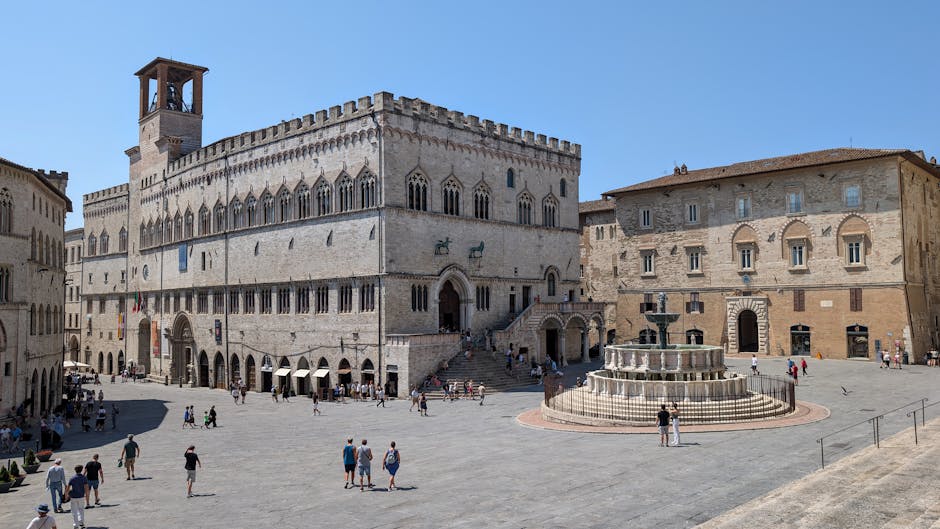
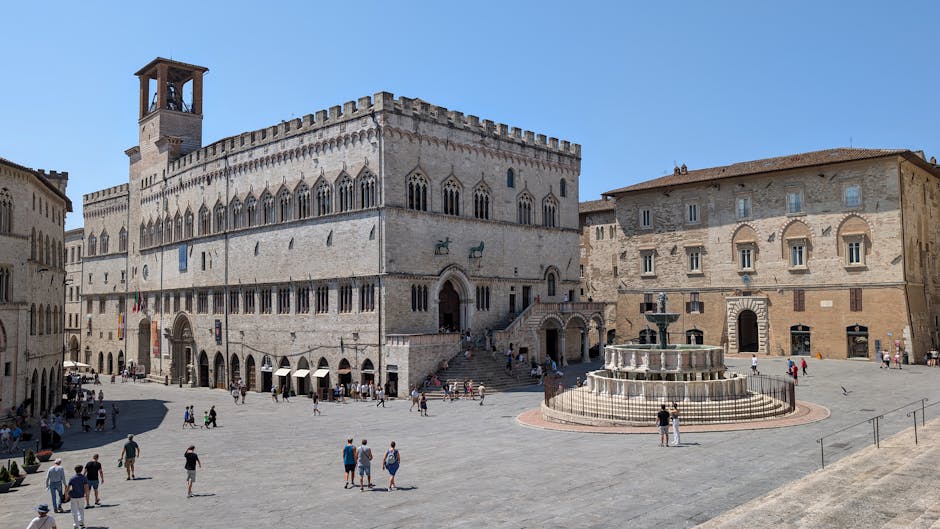
The artistic heart of Perugia sits on Piazza IV Novembre, around the Palazzo dei Priori. This imposing medieval building houses the Galleria Nazionale dell’Umbria (Pinacoteca Nazionale), where panels, altarpieces and transferred frescoes by Umbrian and Renaissance artists are on display. Full address: Palazzo dei Priori, Piazza IV Novembre 1, 06123 Perugia PG, Italy. Main entrance on the square.
The Galleria Nazionale dell’Umbria is generally open Tuesday to Sunday; typical hours: 08:30–19:30 (check public holidays and temporary exhibitions). Indicative prices: adult €8.00–€10.00, reduced (youth 18–25) around €4.00–€5.00, family and child concessions vary — under-18s are often free or discounted depending on national policies. Recommended visit time with children: 1h15 to 2h, focusing on 3 to 5 key rooms to avoid tiring them out.
Why start here? The gallery gives a great visual overview: altarpieces, painted panels and frescoes conserved in controlled rooms. Artists your kids can “meet” include Pietro Perugino (Pietro Vannucci), who painted many public and religious commissions in Umbria, and local masters whose narrative cycles feature easily recognizable figures for children (saints, angels, mythical animals). On a family visit, try a simple game: “Find the object” (a cross, a book, an animal) on each painting — a great way to train observation without overloading information.
Practical tip: the gallery usually offers audio guides and educational routes; ask at reception about children’s booklets or family tours. Bring a small notebook and colored pencils so kids can keep a “travel sketchbook” — quick impressions of shapes and dominant colors help them stay active. After the visit, Piazza IV Novembre is ideal for a break: the Fontana Maggiore and the cathedral of San Lorenzo provide outdoor visual anchors before you continue your stroll.
2) Sala del Collegio del Cambio — Perugino’s frescoes: the Renaissance told to kids
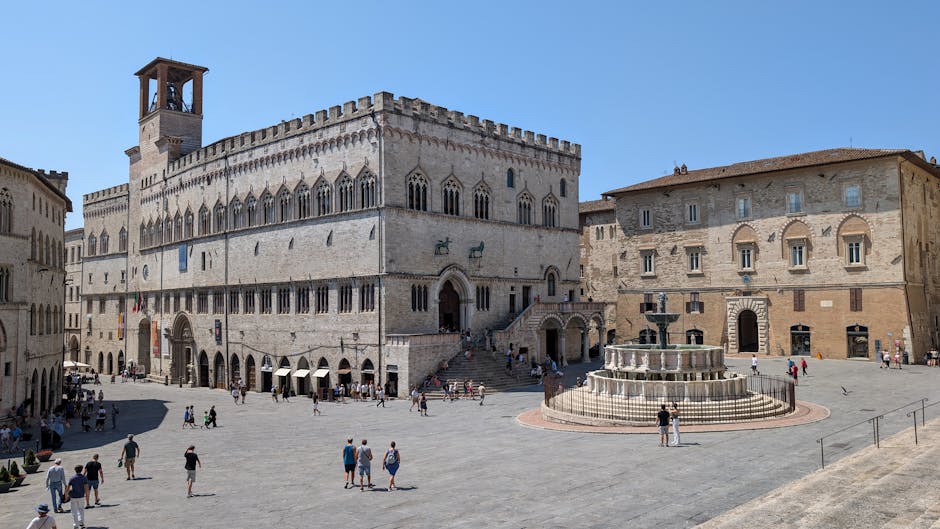
Just steps from the Palazzo dei Priori lies the Sala del Collegio del Cambio, a Renaissance masterpiece painted by Pietro Perugino and his workshop. Address: Collegio del Cambio, Piazza IV Novembre 6, 06123 Perugia PG, Italy (access via the Palazzo dei Priori or a dedicated entrance depending on signage). It’s a place where the intimacy of a small room meets the monumentality of mural painting, perfect for holding children’s attention thanks to a compact space and strong narrative images.
Typical hours: vary by season and bookings (often 09:00–18:00). Indicative price: individual ticket about €8.00–€12.00; reduced rates and combined tickets with the Galleria Nazionale can be available (often joint ticketing at a preferential price). Guided tours are highly recommended, especially family-oriented ones (book ahead if possible). Time on site: 30–45 minutes, but allow up to an hour if you join a child-friendly guided tour.
Immersive description: painted at the end of the 15th century, the Sala del Collegio del Cambio features allegorical figures, saints and mytho-theological scenes arranged in registers, with the balanced composition and soft palette typical of Perugino. The scenes read like short stories: you can turn the visit into a tale — “here’s a wise man that looks like a king, what is he holding?” — and ask kids to imagine what happens next. The calm, expressive faces of the figures offer emotional entry points that younger children can easily relate to.
Local tips: the room is fragile and visitor numbers are limited for conservation. Arrive early or reserve a timed slot. If you have very young children, a baby carrier is better than a stroller — access involves steps and narrow passages. After the visit, take a moment to talk about colors and gestures: why is someone raising their hand? What does the dove represent? These questions build visual literacy without diving into heavy history.
3) Oratorio di San Bernardino and local chapels — confraternity frescoes and hidden little treasures
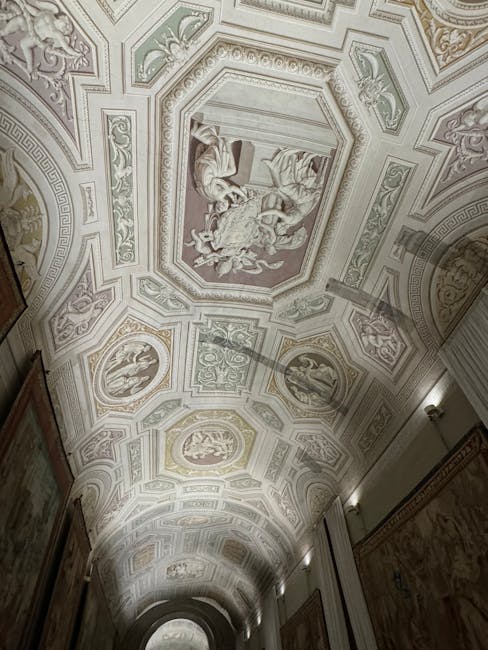
The Oratorio di San Bernardino and several small chapels scattered through the historic center make perfect stops for a more intimate, less museum-like encounter with mural painting in Perugia. Address for Oratorio di San Bernardino: Corso Vannucci / Via dei Priori — full address: Oratorio di San Bernardino, Via dei Priori 3, 06123 Perugia PG, Italy (check local signage). These compact religious spaces, often belonging to confraternities or local orders, contain fresco cycles from the 14th to the 16th centuries, sometimes little-known but very expressive.
Opening hours and admission: access to these oratories and chapels varies widely (some are open on request or at set times); in general they open daytime (09:00–12:30 and 15:00–18:00) but always check locally. Suggested donations: small contribution of €2–5 is commonly asked for upkeep (many chapels allow free access but welcome donations). Flexibility is an asset for families: these places ask for calm and curiosity and provide a great setting to explain biblical or hagiographic episodes in picture form.
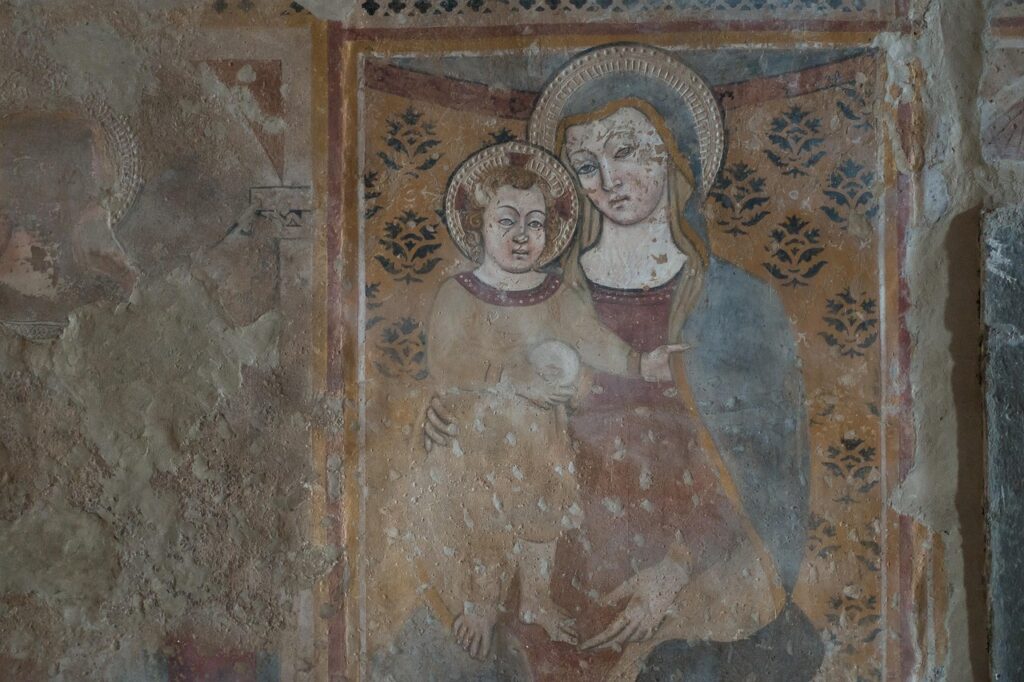
What you’ll see: narrative cycles showing saints’ lives, Madonnas and Gospel episodes, often painted with a more limited palette than grand courts — which makes compositions easier for young viewers to read. Dramatic gestures, clear postures and animals included in scenes (horses, dogs, birds) immediately grab children’s attention. Give them micro-missions: “Find all the animals,” “What color is the saint’s cloak?” or “Copy the pose of this character” — games that make the images come alive.
Practical tips: many of these chapels are compact and better suited to short visits. Plan two or three quick stops (10–20 minutes each) interspersed with a snack break. Ask at the tourist office (Ufficio Informazioni Turistiche, Piazza IV Novembre, 1) which chapels are open on the day of your visit and whether family guides are available. Finally, respect the quiet of the places: speak softly, avoid flash photography and prefer quick sketches on paper rather than indoor photos when asked.
4) Santa Giuliana, San Michele degli Scalzi and other outlying churches — frescoes and human-scale atmospheres
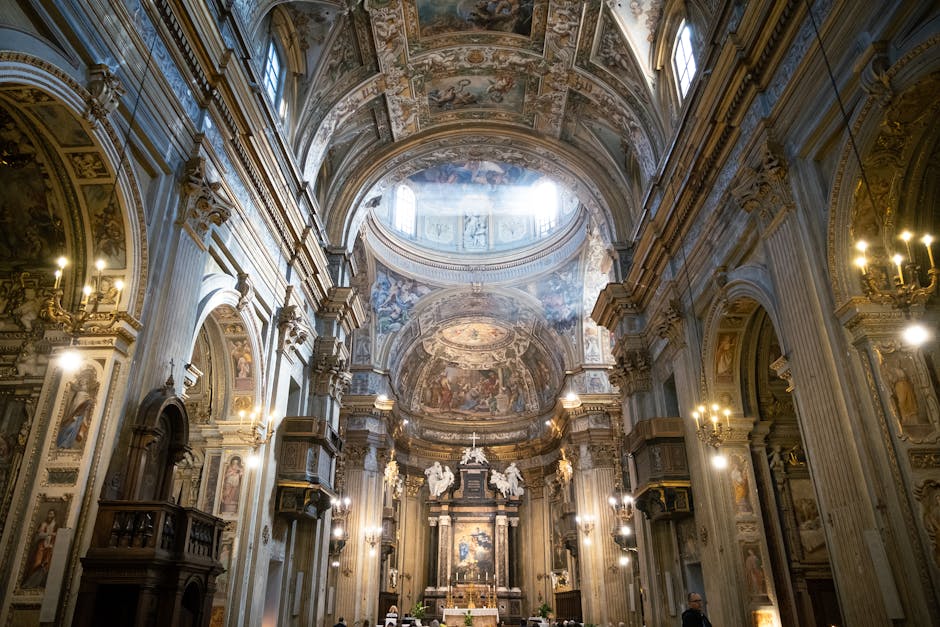
Stepping slightly away from the center, Perugia offers less crowded churches that are equally rich in frescoes and often captivate families with their immediacy and atmosphere. For example, the church of Santa Giuliana and San Michele (various historic buildings in and around the old town) display medieval mural cycles and late Renaissance interventions. Specific addresses: church of Santa Giuliana, Via Pinturicchio (near Corso Vannucci — check local signs); church of San Michele degli Scalzi (on the edge of the historic center — confirm address locally). These names refer to real urban markers in Perugia’s historic fabric, but opening times change with seasons and parish activities.
Hours: access often depends on religious services — it’s best to check with the parish office or the tourist office for visiting slots. Fees: most churches ask for a small voluntary contribution (€1–3) for upkeep and lighting. Ideal visit time with children: 20–40 minutes per site, enough to look and play without wearing out the little ones.
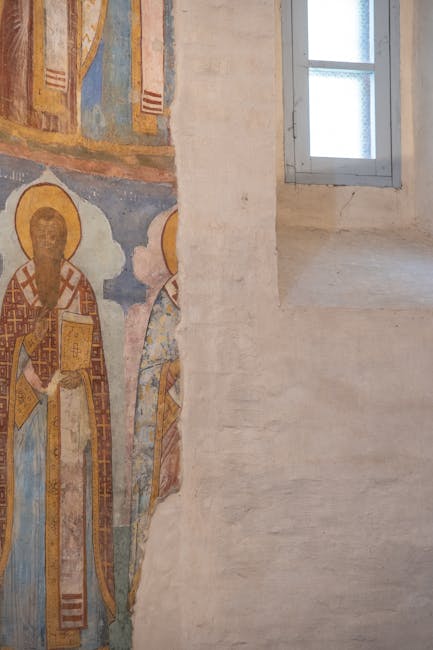
Description and teaching approaches: these peripheral churches often have fragmentary frescoes — incomplete scenes, faded saints, partially-hidden angels — which are fantastic prompts for creative thinking. Ask kids to imagine the rest of the story or draw what they think is missing. Smaller churches also allow a closer look at colors and brushstrokes: it’s a good chance to explain, in simple terms, how fresco works (paint applied on fresh plaster) and the fragility of these surfaces.
Local advice: pack a small bag with water, snacks and a light blanket for breaks. These areas often have shaded benches nearby where kids can run a bit before you resume. If you have time, pair these visits with a local creative workshop: several Perugia cultural associations run short children’s sessions (drawing, collage) near the sites — an excellent way to extend the artistic experience.
5) Themed routes for kids: detail hunts and mini on-site workshops
To turn exploring frescoes and chapels into a memorable family adventure, plan simple themed routes that kids can follow like games. Theme ideas: “Animals in the frescoes,” “The gestures of the saints,” “Renaissance colors.” Each route includes 4 to 6 short stops (walkable paths between sites) and ends with a hands-on activity. Here are two sample mini-routes:
- « Animals & Creatures » route: start at the Galleria Nazionale dell’Umbria to spot animals in the altarpieces (address: Palazzo dei Priori, Piazza IV Novembre 1), then head to the Oratorio di San Bernardino to look for birds and horses. Finish in a small outlying chapel for a free drawing workshop. Duration: 2–3 hours. Estimated cost: museum tickets + small contributions €10–15 per family depending on rates.
- « Colors & Pigments » route: focus on the palette: identify blues, golds and reds in the Sala del Collegio del Cambio (Piazza IV Novembre 6), then compare with older frescoes in nearby chapels. Final activity: simple watercolor mixing (external workshop, €5–10 per child if available).
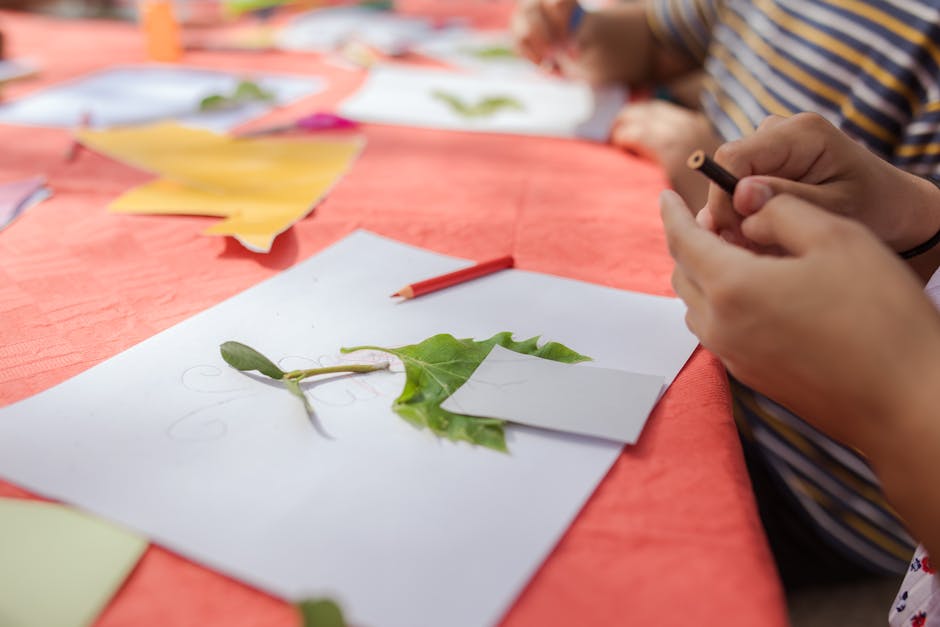
Workshop and materials: bring a small kit — sketchbook, pencils, eraser, a basic watercolor set and a roll of tape to stick drawings on a temporary display during the workshop. Impromptu workshops can take place in public gardens or on piazza benches; for more structured sessions check with local cultural associations that run family workshops (fees €5–15 depending on duration and whether materials are provided).
Practical tips: set simple goals (for example, find five animals, draw three facial expressions) and alternate between sightseeing and breaks to keep interest high. Explain historical context in a few kid-friendly sentences: “This painter lived 500 years ago and painted to tell stories about faith and heroes.” Finally, make the visit a mini-adventure with a “discovery passport”: stamp a small icon on a sheet each time you visit a site — an easy, motivating souvenir for kids.
Conclusion — Take Perugia home through your children’s eyes
Exploring Perugia’s frescoes and chapels with children is a rich experience that takes a bit of planning but repays you many times over: watching kids recognize a saint, spot a hidden animal in a scene, or copy a painted gesture from the 15th century is magic. This guide offers a route centered on Piazza IV Novembre (Palazzo dei Priori and the Galleria Nazionale dell’Umbria), the Sala del Collegio del Cambio, the Oratorio di San Bernardino and several chapels and outlying churches, with concrete tips to turn each stop into a playful learning moment. The addresses and suggested hours help you anticipate logistics; still, flexibility is key: listen to the children’s pace and adapt visit lengths accordingly.
Families get the most out of Perugia by mixing short visits with hands-on activities: travel sketchbooks, mini detail hunts and creative workshops. Book family guided tours where available (especially for the Sala del Collegio del Cambio), arrive early to avoid crowds and choose quiet moments in oratories for closer conversations about the images. Don’t forget to ask the local tourist office (Ufficio Informazioni Turistiche, Piazza IV Novembre, 1) about small chapels’ opening slots and children’s workshop options — they can provide up-to-date info on prices and bookings.
Beyond frescoes and chapels, Perugia is an experience for the senses: the taste of a good gelato after a visit, the sound of footsteps on ancient paving stones, the view of a shaded hillside below. These everyday moments make the artistic outing alive and memorable for the whole family. Bring a notebook full of sketches and short tales — by the time you head home each child will have a mental map of the city populated with saints, animals and colors, having learned to read images without any burden. Enjoy your trip, breathe in the colors, and let Perugia settle into your children’s memories as a warm escape full of painted stories and little discoveries.